PET Bottle Washing Line in Chile: Factory Tour

Chile has emerged as one of South America’s most proactive markets in plastic circularity. The enforcement of the Extended Producer Responsibility law (Ley REP – Law 20.920) has placed binding recovery quotas on packaging producers, creating an immediate deficit of high-purity recycled PET (rPET). Recyclers can no longer sell low-grade flakes processed through cold-wash screening. Downstream packaging converters manufacturing thermoformed fruit clamshells and clear beverage containers demand optical clarity, low yellowing indices, and zero glue residues.

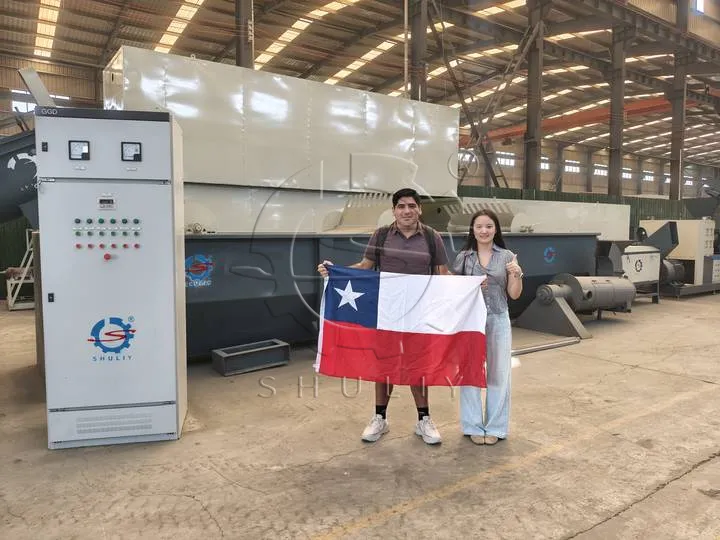
To address these compliance requirements, Carlos, the technical director of a medium-scale processing company in Santiago, visited our production facility in Zhengzhou. His company was planning a dedicated 1,000 kg/h PET bottle recycling line. For an engineering-focused buyer, selecting a plastic recycling machine manufacturer China is not an exercise in catalog shopping; it requires a physical audit of steel wall thicknesses, drive train ratings, and chemical wash dynamics.

Our technical sales manager, Tina, received Carlos at the airport and organized a preliminary briefing over a local meal to align on his factory’s physical constraints before stepping onto the shop floor.
Engineering a PET Bottle Washing Line in Chile
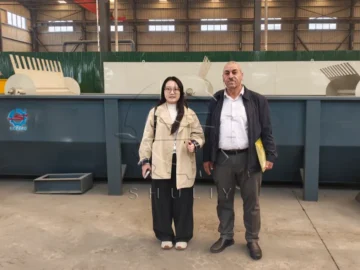
Our client from Chile and our sales manager Tina in the factory
Related to "PET Bottle Washing Line in Chile: Factory Tour"
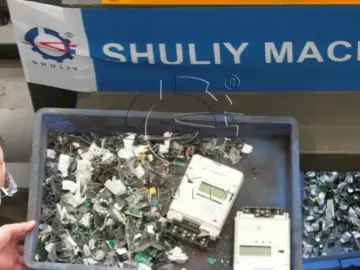
An Introduction to E-Waste Recycling: Key Processes and Essential Machinery
E-Waste Recycling
This guide provides a comprehensive overview of the e-waste recycling process. We cover the key steps from manual dismantling to mechanical shredding and material separation, detailing the essential machinery like e-waste shredders needed to start a profitable and sustainable electronic scrap recycling business.
Beyond the Price Tag: Is a Plastic Recycling Business Profitable?
Is a Plastic Recycling Business Profitable?
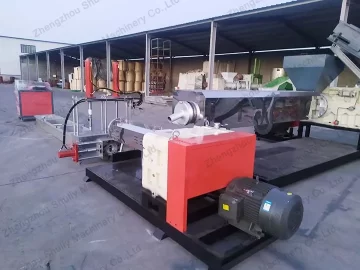
Learn how to evaluate plastic recycling business profitability through plastic granulator ROI, not just upfront machine cost. This guide explains how high-quality pelletizing equipment boosts revenue with better pellets, reliable output, and greater uptime while lowering operating costs through energy efficiency, durability, reduced maintenance, and a faster payback period.
A Practical Guide: How to Successfully Granulate Rigid Plastic with an HDPE flakes pelletizer
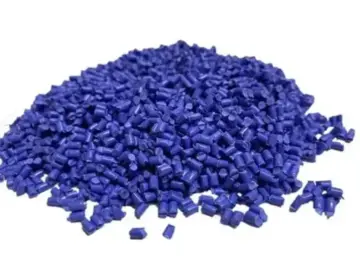
recycled plastic pellets
This guide explains the essential requirements for successfully granulating rigid HDPE flakes and regrind. It details why a high-torque granulator is necessary to process tough materials and why a wear-resistant screw made of 38CrMoAl steel is critical for durability against abrasive flakes. The article provides a clear process overview and connects specific machine specifications (like motor power and screw diameter) to different production scales, from a 300kg/h HDPE pelletizer to a 420kg/h industrial model, to help businesses maximize their HDPE recycling profitability.
A Complete Guide to PP/PE Film Pelletizing Machine: Overcoming the Challenges of Soft Plastic Recycling
This guide provides solutions to the three main challenges of PP/PE film recycling: (1) inconsistent feeding, solved by a compactor feeder; (2) impurities from inks and moisture, solved by a two-stage degassing extruder; and (3) production downtime, solved by a non-stop hydraulic screen changer. It positions a purpose-built PE film pelletizing machine with these features as the essential equipment for turning difficult film scrap into a high-profit product.
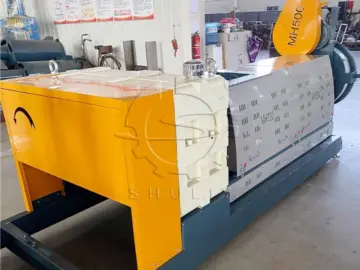
The Double Stage Pelletizer: The Secret to High-Quality Recycled Pellets
recycled plastic pellets with high quality
This article explains why standard single-stage extruders often produce low-quality pellets (e.g., hollow or porous) due to ineffective degassing, especially when processing contaminated or wet plastic waste. It introduces the two-stage "Mother-Son" extruder as a superior solution.